

Transparency has become one of the most frequently invoked values in contemporary brand communication, and like most frequently invoked values, it has been significantly devalued by overuse. Brands that claim transparency while revealing nothing meaningful, that publish sustainability reports full of aspirational language and empty of specific data, that invite consumers to “look behind the scenes” and then show them a carefully curated version of a process stripped of anything that might be complicated or unflattering — these brands have turned a genuine virtue into a marketing cliché.
Real transparency is rarer and more demanding. It means showing the actual process, with its genuine complexity, its real costs, and its honest limitations alongside its achievements. It means making specific, verifiable claims rather than general, feel-good ones. And it means accepting that the audience is intelligent enough to appreciate substance over performance. For Snob’s Coffee, transparency about the solar roasting process is not a marketing strategy applied to a generic product. It is a genuine invitation to understand something real — and that distinction is what makes it powerful.
What Real Transparency Looks Like
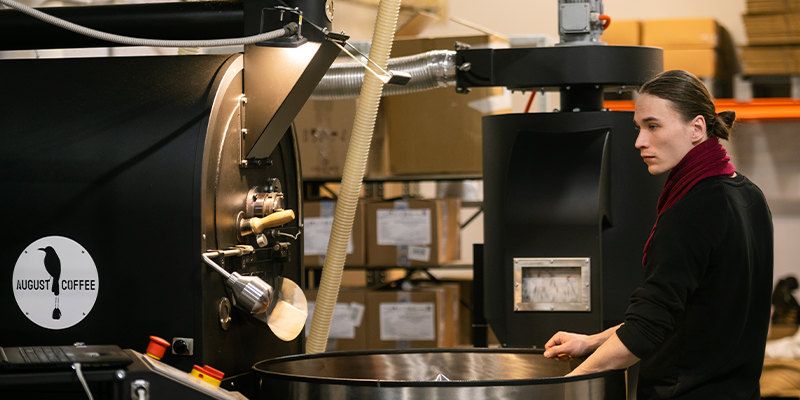
The solar roasting process at Snob’s Coffee is, objectively, interesting. A commercial solar installation powering an industrial roastery, buffered by battery storage capable of maintaining production through low-generation periods, monitored in real time by energy management software that interfaces directly with the roasting profiling system — this is a story with genuine technical depth, real engineering decisions, and meaningful environmental consequences. It does not need to be simplified into a slogan. It needs to be explained clearly, at appropriate depth for the audience, with specific numbers rather than vague gestures toward sustainability.
The marketing application of this transparency begins with the most basic question a curious consumer might ask: how exactly does solar energy power the roasting process? The honest answer involves photovoltaic panels, battery storage, electrical conversion, and the specific advantages that a clean, stable electrical energy source provides over gas combustion in terms of roast consistency and environmental impact. This answer can be delivered at multiple levels of depth — a single sentence on a coffee bag, a paragraph on a website, a detailed explainer video on social media, a comprehensive technical briefing for trade buyers — depending on the audience and the context.
Transparency as Differentiation
In a specialty coffee market where sustainability claims are proliferating but substantiation is rare, genuine transparency is a powerful differentiator. The roastery that publishes its energy generation data, documents the carbon reduction per kilogram of coffee roasted, and invites independent verification of its environmental claims is doing something that its competitors are not. The competitive advantage this creates is not merely reputational — though the reputational benefit is real. It is structural: once a brand has established a culture of transparency and a customer base that values and trusts it, the cost of that trust’s erosion acts as a powerful internal discipline against the shortcuts and compromises that undermine quality over time.
Transparency also creates content. The solar roastery is a visual and narrative asset of considerable richness. Time-lapse footage of panels generating the energy that flows into a morning’s roasting session. Real-time data displays showing generation versus consumption across a production day. Side-by-side comparisons of the roast profiles enabled by stable solar energy against the variable profiles produced by fluctuating gas pressure. Each of these is a piece of content that is simultaneously engaging, educational, and directly supportive of the brand’s core value proposition.
Building Trust Through Specific Claims
The most commercially valuable form of transparency is the specific, verifiable claim. Not “we care about the environment” but “our solar installation has eliminated approximately X tonnes of CO₂ equivalent from our annual production footprint, verified against the national grid emissions factor.” Not “we pay our producers fairly” but “we paid an average of X percent above the Fair Trade minimum price to our direct trade partners in the last sourcing year.” Not “we take quality seriously” but “we reject approximately X percent of roasted batches that do not meet our cupping standard before they reach the customer.”
Each of these specific claims does several things simultaneously. It demonstrates that the brand has actually measured what it is claiming to care about — which is itself a signal of seriousness. It provides the customer with information concrete enough to evaluate and remember. And it creates accountability: a brand that has published specific numbers has committed to being measured against them, which disciplines the organization to maintain and improve the performance those numbers reflect.
The Limits of Transparency
Authentic transparency requires honesty about limitations as well as achievements. The solar roastery is not a perfect solution to South Africa’s energy and environmental challenges — it is a meaningful contribution to addressing them within the specific context of one commercial roastery. The direct trade sourcing relationships are valuable, but they do not extend to every element of the supply chain. The quality control process is rigorous, but no process is infallible.
Acknowledging these limitations is not a weakness in brand communication. It is a mark of credibility that distinguishes genuine transparency from the performative variety. A brand that admits what it has not yet achieved earns more trust for what it claims to have achieved than a brand that presents an unblemished image that no honest operation can sustain.
Transparency, practiced with this level of integrity, is not a marketing tool in the conventional sense. It is a brand-building discipline — one that creates the kind of durable customer trust that no campaign budget can purchase and no competitor can easily replicate.