
Of all the sensory dimensions of coffee, mouthfeel and acidity are perhaps the most misunderstood by the general consumer — and the most passionately debated among specialty professionals. Mouthfeel encompasses the physical sensation of coffee in the mouth: its weight, its texture, its viscosity, the way it coats the palate and lingers after swallowing. Acidity, in specialty coffee parlance, is not sourness or sharpness in the pejorative sense but brightness — the lively, often fruit-forward quality that gives a well-made coffee its sense of energy and vitality. Both dimensions are profoundly affected by roasting technology, and understanding how different heat transfer mechanisms shape these characteristics is essential to understanding why Snob’s Coffee’s technological choices produce the cup profiles they do.
Conduction Roasting: Strengths and Limitations
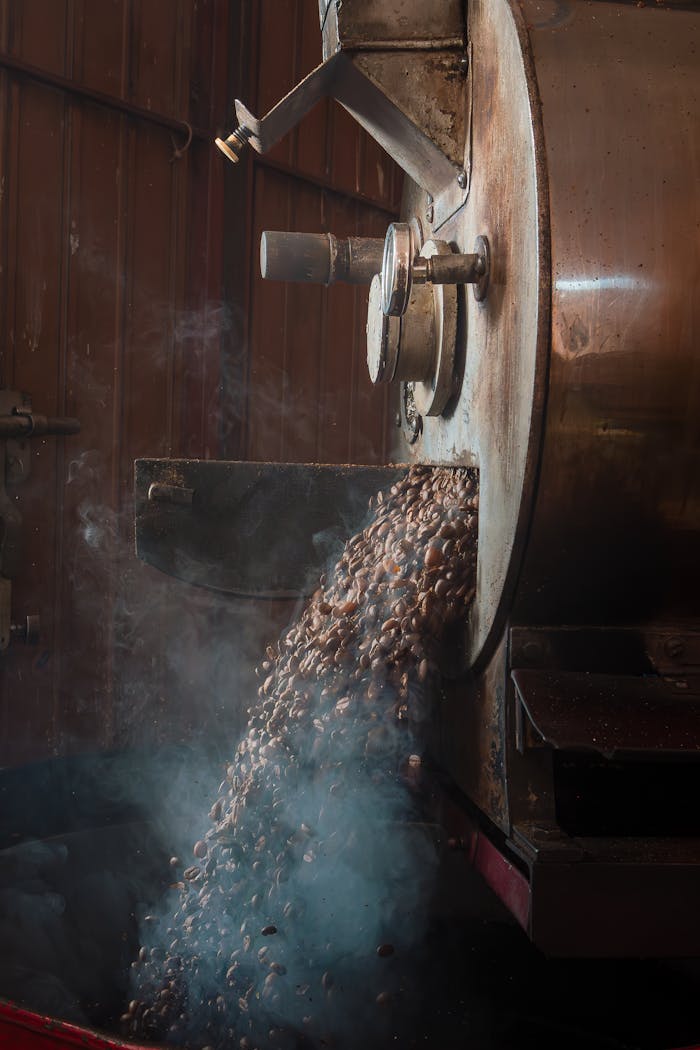
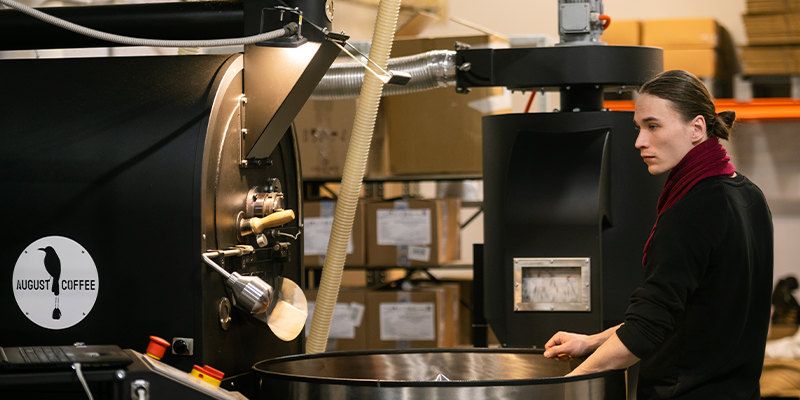
Conduction — the transfer of heat through direct physical contact — is the oldest and most familiar mechanism in coffee roasting. Traditional drum roasters rely substantially on conduction: beans tumble against the heated metal drum surface, absorbing thermal energy through contact. The process is reliable and, in skilled hands, capable of producing excellent results across a wide range of roast profiles.
But conduction has inherent limitations when it comes to mouthfeel and acidity. Because heat is applied from the outside in, conduction-heavy roasting tends to develop the bean surface faster than the core. This differential development — sometimes called “tipping” at its extreme — can produce a cup with a heavier, sometimes slightly tarry body, as the surface compounds that contribute to perceived weight and texture develop disproportionately. Meanwhile, the internal development that preserves bright, fruity acids may be incomplete, leading to a cup that feels dense but lacks the acidity that would provide lift and complexity.
The skilled conduction roaster compensates for these tendencies through careful manipulation of drum temperature, airflow, and charge weight. But the compensation requires constant attention and is vulnerable to environmental variables — ambient temperature, humidity, gas pressure fluctuations — that lie outside the roaster’s direct control.
Fluidised Bed Technology: A Different Physical Reality
Fluidised bed roasting — also known as air roasting — operates on an entirely different physical principle. Rather than tumbling beans against a heated surface, it suspends them in a stream of precisely heated air, roasting primarily through convection. Each bean is surrounded by moving hot air on all sides simultaneously, resulting in an extraordinarily even heat distribution that conduction alone cannot achieve.
The implications for mouthfeel and acidity are significant. Because heat reaches the bean core more uniformly in a fluidised bed system, the internal development that preserves delicate organic acids — malic, citric, tartaric — proceeds more completely and more predictably. The result is a cup with a more defined, brighter acidity: cleaner, more precise, more characteristic of the specific origin rather than of the roasting process.
Mouthfeel in fluidised bed-roasted coffee tends toward the lighter and more transparent end of the spectrum. This is not a deficiency — it is a stylistic characteristic that suits certain origins and consumer preferences exceptionally well. A high-altitude Ethiopian or a Kenyan AB, where the cup’s value lies in its aromatic complexity and citric brightness rather than its body weight, benefits enormously from this approach. The transparency of the mouthfeel allows the acidity and aroma to express themselves without competition from heavy, roast-derived body compounds.
Finding the Balance
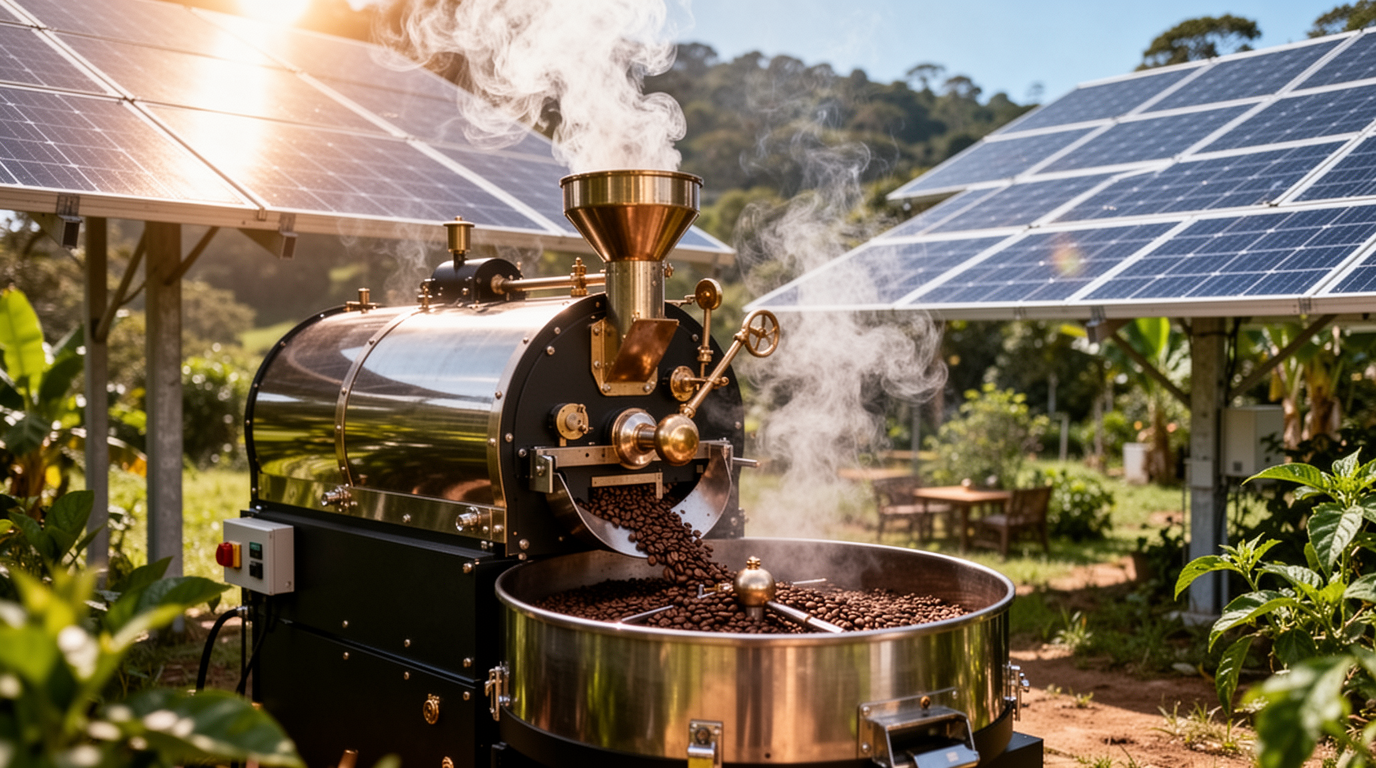
At Snob’s Coffee, the roasting philosophy draws on both traditions. The solar-powered roasting system incorporates elements of both conduction and convective heat transfer, allowing the roasting team to adjust the balance depending on the specific requirements of each green lot. A naturally processed coffee from Ethiopia, with its inherent body and sweetness, may benefit from more conductive influence to build structure. A washed Kenyan, valued for its precision and brightness, may be better served by a more convective profile that preserves its characteristic acidity.
This flexibility — the ability to apply different heat transfer ratios to different origins — is one of the most powerful tools available to the modern specialty roaster. Technology that constrains the roaster to a single heat transfer mode limits the range of cup profiles achievable. Technology that allows dynamic adjustment across that spectrum enables a level of origin fidelity that truly separates specialty roasting from commodity production.
What the Consumer Experiences
For the consumer, the practical outcome of these technical choices is a cup that feels intentional. The mouthfeel is appropriate to the origin — neither too heavy nor too light, but calibrated to support and enhance the flavor characteristics that make that specific coffee worth drinking. The acidity is present and vibrant without being sharp or aggressive, providing the brightness that distinguishes a great specialty cup from a merely pleasant one.
In the end, the physics of heat transfer are invisible to the person holding the cup. What they experience is the result: a coffee that tastes exactly like itself, with nothing added and nothing lost.