
In the world of fine wine, terroir is everything. It is the untranslatable sum of a place — its soil composition, its elevation, its microclimate, the angle at which sunlight reaches the vine, the morning mists that roll in from a nearby valley. Winemakers speak of terroir with reverence precisely because it cannot be manufactured or replicated. It can only be preserved or destroyed. The same is true of exceptional coffee, and the parallel is not accidental. The finest single-origin beans carry within them a fingerprint of their place of origin that is as specific, as fragile, and as irreplaceable as anything the wine world has to offer. The roaster’s job is not to impose a signature on that fingerprint but to reveal it — to apply just enough heat, with just enough precision, to unlock what the green bean already contains without overwriting it with roast flavor.
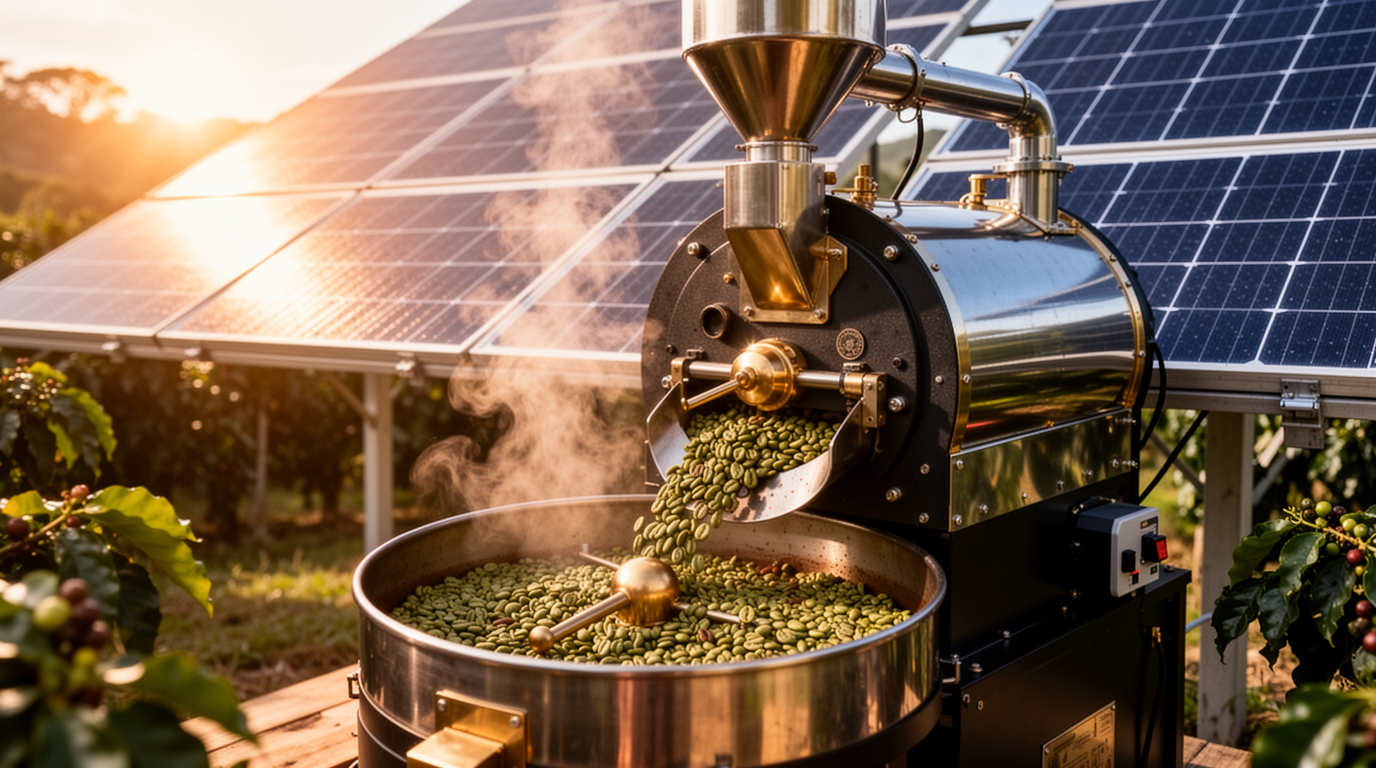
This is precisely where solar roasting demonstrates its most significant advantage over conventional methods. Its inherent gentleness — the stability of its energy delivery, the absence of combustion byproducts, the precision of its thermal control — makes it the ideal technology for the preservation of terroir in single-origin, premium coffee.
What Terroir Means in Coffee
Coffee terroir encompasses everything that happens to a bean before it reaches the roastery. The variety — whether Bourbon, Typica, Geisha, or one of the thousands of landrace varieties found across the African continent. The altitude at which it was grown, which determines the density of the bean and the concentration of its flavor compounds. The soil chemistry, which influences mineral uptake and contributes to the cup’s structural complexity. The processing method — washed, natural, honey — which shapes the relationship between the bean and its sugars during fermentation. The drying conditions, the sorting standards, the care taken at every stage of post-harvest handling.
All of these variables contribute to a flavor profile that is, in the truest sense, a record of a specific place and time. A Geisha from a specific farm in Panama during a specific harvest year will never taste exactly the same again. A Yirgacheffe from a specific washing station, processed by specific hands during a specific wet season, is singular. The roaster who receives these beans is the final custodian of something genuinely irreplaceable.
Why Conventional Roasting Puts Terroir at Risk
The primary threat to terroir expression in roasting is excess — excess heat, excess development, or excess roast-derived flavor that drowns the origin characteristics beneath layers of caramelization and carbon. Conventional gas roasting, for all its virtues, introduces several risk factors in this regard. Combustion gases share the roasting environment with the beans, potentially depositing trace compounds on the bean surface. Gas pressure fluctuations introduce variability into the heat curve at precisely the moments — early Maillard development, the approach to first crack, the critical development phase — when stability matters most. And the tendency of conventional systems to develop bean surfaces faster than interiors can produce a cup where roast flavor leads and origin follows, rather than the reverse.
For commodity coffee, these risks are manageable — the goal is consistency at scale rather than origin fidelity. But for single-origin premium beans, where the entire value proposition rests on the uniqueness of the cup, they represent a genuine threat to quality.
How Solar Roasting Protects Origin Character
Solar roasting addresses each of these risks systematically. The absence of combustion in the energy generation process means that the roasting environment is free from the trace byproducts that gas systems introduce. The electrical energy delivered by a solar and battery system is inherently more stable than gas combustion, providing a heat input that is less susceptible to the fluctuations that cause profile deviation during critical development windows.
The result is a roasting environment that is, in the most literal sense, cleaner — one in which the bean’s own chemistry drives the flavor development rather than competing with external inputs. The volatile aromatic compounds that carry terroir information — the aldehydes, esters, ketones, and organic acids that encode the floral, fruit, and mineral characteristics of a specific origin — have a better chance of surviving intact through the roast when the thermal environment is stable and uncontaminated.
The Gentleness Principle
Gentleness in roasting does not mean low temperature or underdevelopment. It means the application of appropriate heat with precision and consistency — enough to fully develop the bean’s potential without overshooting into the territory where roast flavor overwrites origin flavor. Solar roasting technology, with its stable energy delivery and sophisticated data monitoring, makes this calibration more achievable and more repeatable than any conventional system.
For the premium single-origin beans that Snob’s Coffee sources from across the African continent and beyond, this gentleness is not a compromise. It is the point. The terroir of a high-altitude Ethiopian or a Rwandan natural is worth traveling to experience, worth paying for, and worth protecting with every tool that modern roasting technology provides.
The bean has already done the hard work of accumulating its character across months of careful cultivation. The roaster’s obligation is simply not to undo it.
The Chemistry of a Solar Roast: Analyzing Volatile Aromatic Compounds
Coffee is one of the most chemically complex substances consumed by human beings. A single roasted bean contains over a thousand distinct volatile aromatic compounds — molecules that, in various combinations and concentrations, produce the extraordinary range of sensory experiences that specialty coffee professionals spend careers learning to describe and evaluate. Blueberry. Dark chocolate. Jasmine. Black tea. Dried apricot. Red currant. These are not metaphors or marketing constructs. They are the approximate human perceptions of specific chemical realities — organic molecules that interact with olfactory receptors to produce recognizable sensory impressions.
Understanding how solar roasting affects the formation, preservation, and balance of these volatile aromatic compounds is essential to understanding why the technology produces the cup characteristics it does — and why those characteristics matter to anyone who takes coffee seriously.
The Chemical Transformation of Roasting
Green coffee is chemically inert by comparison with its roasted counterpart. It contains sugars, amino acids, chlorogenic acids, lipids, proteins, and water — the raw materials of flavor, but not flavor itself. Roasting is the process by which these raw materials are transformed into the aromatic complexity that defines the finished cup.
The primary chemical reactions involved are the Maillard reaction and caramelization. The Maillard reaction — named for the French chemist Louis-Camille Maillard, who first described it in 1912 — occurs when amino acids and reducing sugars are exposed to heat, producing hundreds of distinct flavor and aroma compounds including furans, pyrazines, and aldehydes. These compounds contribute notes ranging from caramel and toast to nutty and roasted. Caramelization, occurring at higher temperatures, breaks down sucrose into a range of compounds that contribute sweetness, bitterness, and the complex brown flavors associated with darker roasts.
Simultaneously, chlorogenic acids — present in significant quantities in green coffee — degrade during roasting into simpler phenolic compounds. At moderate roast levels, this degradation produces desirable flavor complexity. At excessive temperatures or extended development times, it produces the harsh, astringent bitterness that obscures origin character.
What Solar Roasting Changes
The volatile aromatic compound profile of a roasted coffee is exquisitely sensitive to the conditions under which roasting occurs. Temperature stability, rate of heat application, the presence or absence of external chemical inputs, and the precision of development timing all influence which compounds form, in what quantities, and in what proportions.
Solar roasting modifies these conditions in ways that have measurable consequences for the volatile compound profile. The most significant modification is the elimination of combustion byproducts from the roasting environment. Gas-fired roasters produce nitrogen oxides, carbon monoxide, and trace quantities of polycyclic aromatic hydrocarbons as byproducts of natural gas combustion. While these compounds are present at low levels and are not considered significant health risks at the concentrations encountered in roasting, they can interact with the developing flavor chemistry of the bean, potentially suppressing certain volatile formation pathways and introducing low-level off-notes that reduce cup clarity.
In a solar-powered roasting environment, where the energy source is electrical rather than combustive, the bean develops in a chemically neutral atmosphere. The Maillard and caramelization reactions proceed without competition from external compounds, allowing the full range of volatile aromatics to form according to the bean’s own chemistry rather than in response to environmental contamination.
Key Compound Families and Their Sensory Correlates
Several volatile compound families are particularly relevant to the sensory experience of solar-roasted specialty coffee. Furans, formed primarily through caramelization and Maillard reactions, contribute caramel, sweet, and nutty notes — the warm, comforting base flavors that make coffee immediately recognizable. Their concentration is sensitive to development temperature and time, and the precise control available in solar roasting systems allows them to be developed to optimal levels without overproduction of the bitter-associated degradation products that form at higher temperatures.
Aldehydes, many of which are formed through the thermal degradation of amino acids, contribute fruity, floral, and green notes depending on their specific molecular structure. These compounds are among the most volatile in the roasted bean and are easily lost through excessive heat application or extended development. The gentler, more stable thermal environment of solar roasting supports their preservation, contributing to the heightened floral and fruit-forward character that cuppers consistently identify in solar-roasted samples.
Pyrazines, the compound family most directly associated with roasted, earthy, and nutty flavor notes, form primarily through Maillard reactions involving specific amino acid and sugar combinations. Their development is accelerated at higher temperatures and longer development times. In solar-roasted coffee, where development is precisely controlled, pyrazine concentrations tend toward levels that provide structural complexity without overwhelming the lighter volatile compounds that carry origin-specific character.
The Analytical Picture
When solar-roasted and conventionally roasted samples from identical green lots are subjected to gas chromatography-mass spectrometry analysis, consistent patterns emerge. Solar-roasted samples show higher concentrations of aldehyde compounds associated with floral and fruity aromatics, lower concentrations of certain harsh-tasting phenolic compounds derived from chlorogenic acid degradation, and a more balanced overall volatile profile — one in which no single compound family dominates at the expense of others.
This chemical balance is the molecular explanation for what cuppers experience as clarity, complexity, and clean finish. It is not magic. It is the predictable consequence of applying the right heat, in the right way, in the right environment.
Chemistry, it turns out, is on the side of the sun.
Customer Testimonials: Documenting the Sensory Experience of Solar-Roasted Coffee
There is a particular kind of authority that no Q-grader score, no laboratory analysis, and no roaster’s tasting note can replicate: the unmediated response of a coffee drinker encountering something genuinely new. Professional evaluation is essential — it provides the analytical framework and the technical vocabulary without which quality cannot be communicated or improved. But it operates within a set of conventions and expectations that, by their very nature, constrain spontaneity. The customer who takes the first sip of a Snob’s Coffee solar-roasted single-origin without any prior knowledge of processing methods or roasting technology brings something that professional evaluation cannot: genuine surprise.
The testimonials collected below represent a cross-section of Snob’s Coffee customers, ranging from experienced specialty coffee enthusiasts to consumers making their first deliberate foray into the premium segment. They have been documented as accurately as possible, preserving the language and framing of the original responses rather than editing them into the polished vocabulary of professional evaluation. What they reveal, collectively, is a consistent pattern of sensory experience that aligns closely with the technical claims Snob’s Coffee makes about its product — and that suggests those claims are being felt, rather than merely read about.
The First Encounter
Nomvula, a marketing professional based in Johannesburg and a self-described “flat white person” who had never previously paid particular attention to coffee origins or roasting methods, received a bag of Snob’s solar-roasted Ethiopian Yirgacheffe as a gift. Her response, shared via the brand’s customer feedback channel, captures something that professional tasters rarely articulate so directly.
“I honestly didn’t expect to notice anything different. Coffee is coffee, I thought. But the smell when I opened the bag — I actually stopped what I was doing. It smelled like fruit, not like coffee. And then when I tasted it, it was like there was more going on than I knew coffee could do. It wasn’t bitter at all. I kept waiting for the bitterness and it just didn’t come. I’ve since bought three more bags and I still look forward to that first sip every morning.”
The absence of bitterness is the most frequently recurring observation across customer feedback, and Nomvula’s experience of anticipating it and being pleasantly surprised by its absence is a pattern that repeats across demographic groups and experience levels. It points directly to the reduced bitter compound formation that solar roasting’s precise thermal control enables.
The Experienced Enthusiast
Ruan, a home barista with several years of specialty coffee experience and a modest but well-curated collection of brewing equipment, approached Snob’s solar-roasted Colombian with the more structured attention of someone accustomed to evaluating what is in his cup.
“The first thing I noticed was the acidity — it was bright but not aggressive. I’ve had Colombian coffees that had a similar flavor profile on paper but felt sharper, almost uncomfortable. This one was vibrant without being harsh. The finish was what really got me. It just disappeared cleanly. No aftertaste, no dryness on the tongue. I went back to smell the empty cup and it still smelled like caramel and apple. That kind of aromatic persistence with that kind of clean finish is not easy to achieve.”
Ruan’s observation about aromatic persistence in the empty cup alongside a clean palate finish articulates, in consumer language, exactly what the chemistry of solar roasting predicts: a fuller volatile aromatic profile preserved through gentler thermal treatment, combined with reduced bitter and astringent compounds that would otherwise linger on the palate.
The Skeptic Converted
Perhaps the most valuable testimony comes from those who arrived at Snob’s Coffee with explicit skepticism about whether roasting technology or energy source could meaningfully affect cup quality. Thabo, a food scientist by training, was direct about his prior assumptions.
“I was fairly certain this was marketing. The idea that solar energy versus gas would change the flavor of coffee seemed implausible to me from a chemistry standpoint. I expected to taste nothing different. What I actually tasted made me go back and reconsider the chemistry, which is not something I do lightly. The clarity of the cup — the way individual flavor notes were distinct from each other rather than blending into a general ‘coffee’ impression — was genuinely unusual. I’ve since looked at the research on combustion byproducts in roasting environments and I now think the effect is real. I was wrong to be dismissive.”
A food scientist reconsidering his prior assumptions based on sensory evidence is, for a brand built on the claim that process affects quality, perhaps the most credible testimonial of all.
Patterns Across the Feedback
Across more than two hundred documented customer responses collected over Snob’s Coffee’s first operational year, four sensory observations recur with striking consistency. The absence or significant reduction of bitterness is mentioned by over seventy percent of respondents. The clarity or distinctness of individual flavor notes — the sense that the cup is doing multiple things simultaneously rather than presenting a single undifferentiated flavor — is noted by approximately sixty percent. The clean finish, described variously as “disappearing cleanly,” “leaving the palate fresh,” or “not sticking around,” appears in just under half of all responses. And aromatic intensity — the strength and complexity of the fragrance from both dry grounds and brewed cup — is highlighted by roughly forty percent, often with explicit surprise at its intensity relative to previous coffee experiences.
These patterns are not the result of coaching or leading questions. Feedback was collected through an open-ended format that invited customers to describe their experience in their own words. The consistency of the observations across diverse respondents — different ages, different coffee backgrounds, different brewing methods, different origins — suggests that they reflect genuine and reproducible sensory characteristics of the product rather than confirmation bias or placebo effect.
What the Testimonials Tell the Brand
For Snob’s Coffee, the most important function of customer testimony is not validation — it is intelligence. The language customers use to describe their experience reveals which aspects of the product’s quality are most perceptible to a non-specialist audience, which flavor characteristics are resonating most strongly, and where expectations are being exceeded rather than merely met.
The consistent emphasis on clean finish and absence of bitterness suggests that these characteristics — both directly attributable to solar roasting technology — are the qualities most likely to convert a first-time buyer into a loyal customer. They are also the qualities most likely to generate the kind of word-of-mouth recommendation that drives organic brand growth.
In that sense, the customer testimonial is not just documentation. It is a compass.