
There is a moment that every entrepreneur in South Africa knows well. The power goes out. The machines stop. The carefully calibrated roast profile — the one that took weeks to develop, that captures the precise balance of acidity and sweetness in a Yirgacheffe natural — is interrupted mid-development, and the batch is lost. It happens once. It happens again. And then, if you are building a business that refuses to accept unreliability as a permanent condition, you start asking a different question: not how to cope with the grid, but how to stop depending on it.
That question is what led Snob’s Coffee to build South Africa’s first fully solar-powered specialty coffee roastery — and the journey from question to operational reality is a story about infrastructure, ingenuity, and the kind of stubbornness that serious entrepreneurship requires.
The Problem Has a Name
South Africa’s energy crisis is well documented. Load shedding — the scheduled rolling blackouts implemented by the national utility Eskom to manage demand on a strained grid — has become a defining feature of the country’s business environment. At its worst, outages have reached eight hours per day, rendering conventional manufacturing schedules nearly impossible to maintain. For a coffee roastery, where temperature consistency and timing are everything, this is not a minor inconvenience. It is an existential threat to quality.
Diesel generators, the standard response, solve the immediate problem but create new ones. They are expensive to run, noisy, polluting, and ill-suited to the precision requirements of specialty roasting. More fundamentally, they represent a capitulation — an acceptance that unreliable infrastructure is simply the cost of doing business in South Africa. Snob’s Coffee was unwilling to accept that framing.
Engineering Around the Grid
The decision to go solar was straightforward in principle and deeply complex in practice. Coffee roasting is an energy-intensive process. Industrial drum roasters draw significant power loads, and the thermal demands of repeated roast cycles across a working day require sustained, reliable energy delivery — not the intermittent output that an undersized solar installation might provide.
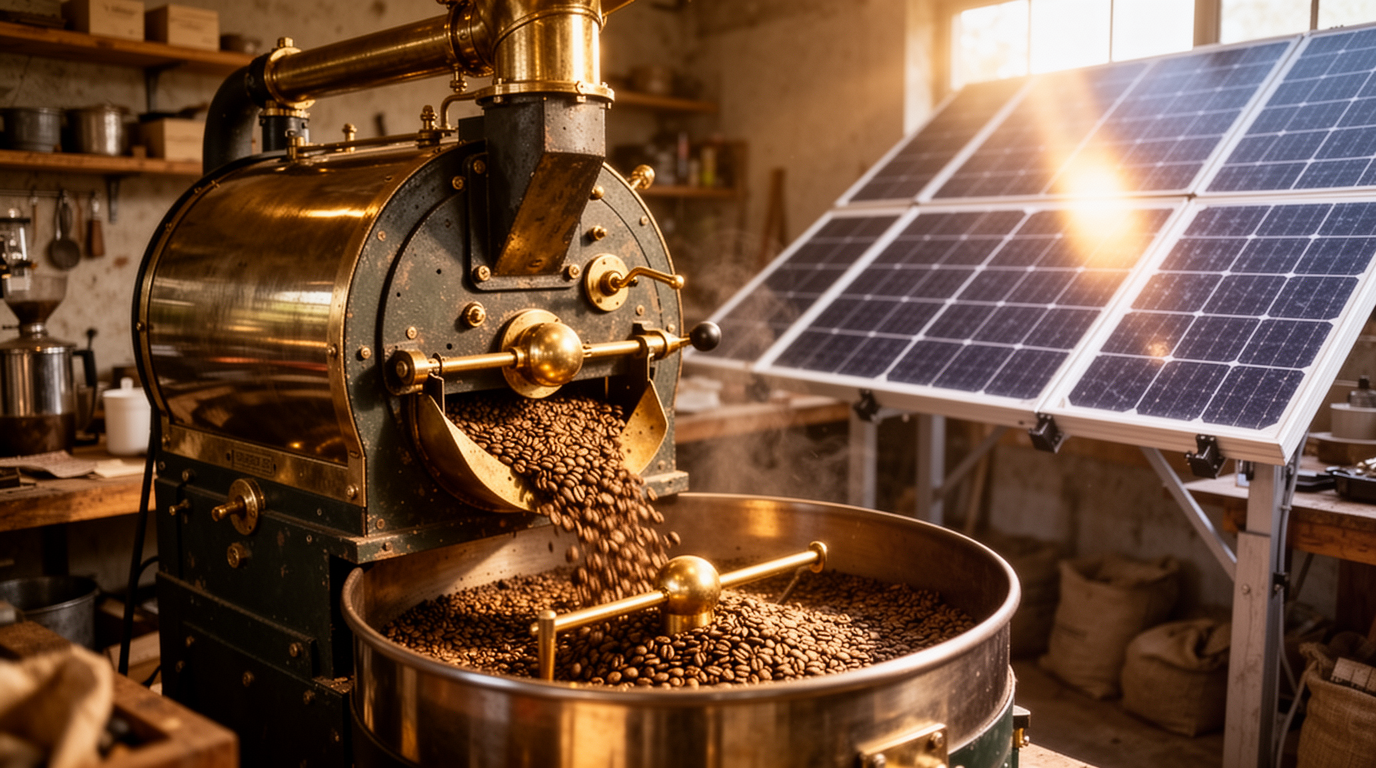
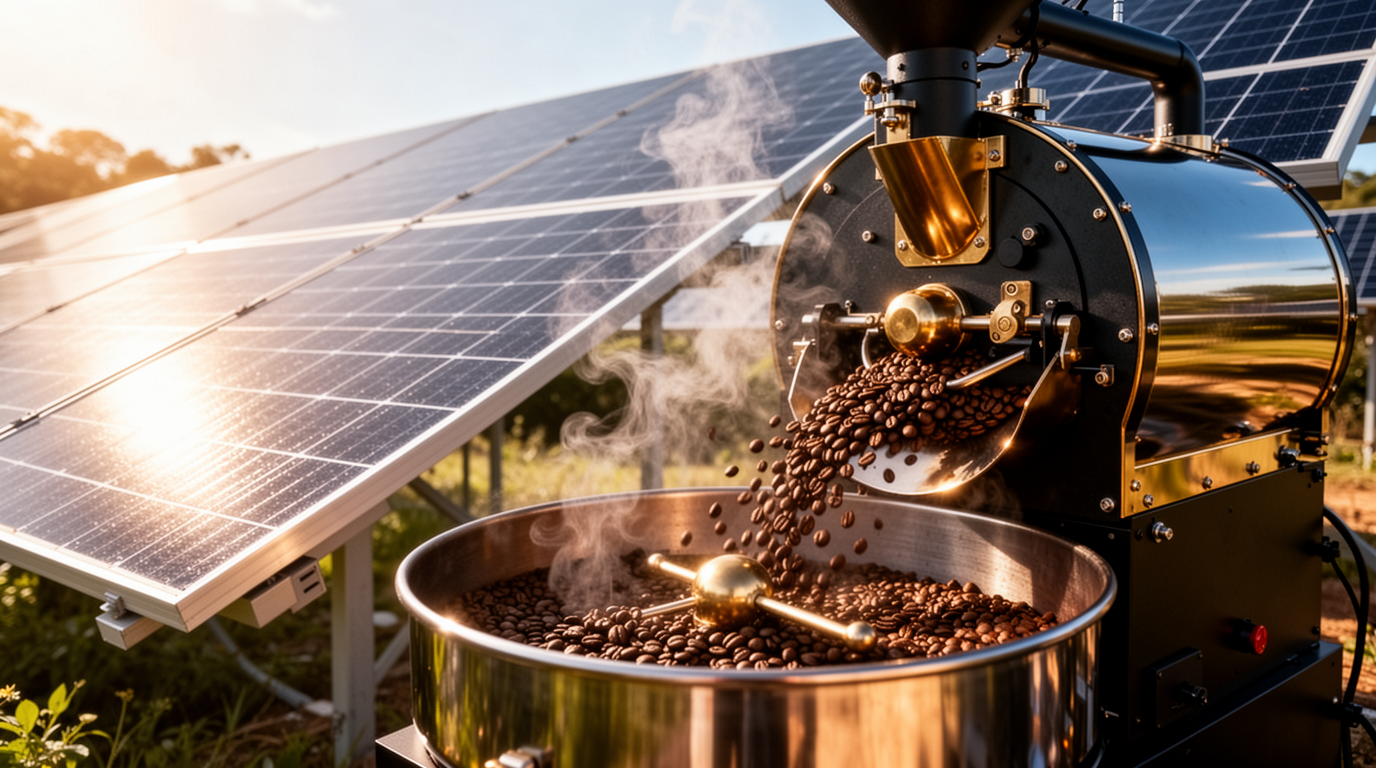
The solution required careful engineering. A system of high-capacity photovoltaic panels, purpose-configured for South Africa’s exceptional solar irradiance, was paired with a battery storage array capable of carrying the roastery through periods of low generation or peak demand. The system was designed not merely to supplement grid power but to replace it entirely — with enough redundancy built in to maintain operations through overcast days and extended high-volume production periods.
The process was neither fast nor inexpensive. It required working with specialist installers, navigating local authority approvals, managing lead times on imported components, and solving unexpected technical challenges that only revealed themselves during commissioning. But it worked.
What the Numbers Mean
An operational solar roastery does more than insulate a business from load shedding. It fundamentally changes the cost structure of production. Once the capital investment is recovered, energy costs drop to near zero. This creates margin that can be reinvested in better green coffee, in staff training, in equipment upgrades, or in competitive pricing that makes premium coffee more accessible without compromising quality.
It also changes the environmental story. Every kilogram of coffee roasted on solar power rather than fossil fuels represents a measurable reduction in carbon output. For a brand built on the intersection of quality and responsibility, that is not a footnote — it is a core part of the value proposition.
A Model Worth Replicating
The Snob’s solar roastery is significant beyond its immediate commercial application. It demonstrates something that South African business needs to see demonstrated: that infrastructure constraints, however real and however frustrating, are not permanent ceilings. They are engineering problems. And engineering problems have solutions.
In a country where entrepreneurial creativity has always outpaced institutional reliability, that is perhaps the most important thing to prove.