

South Africa, a nation rich in diversity and natural resources, faces significant challenges regarding sustainable development and energy consumption. Among the most promising initiatives in addressing these challenges is Snob’s Coffee, a pioneering company dedicated to transforming the agro-processing sector through innovative and sustainable practices. This essay explores how Snob’s Coffee is not only revitalizing the coffee industry in South Africa but also positioning itself as a leader in the country’s energy transition.
#### The Context of Agro-Processing in South Africa
Agro-processing in South Africa has traditionally relied on conventional energy sources, contributing to environmental degradation and high levels of carbon emissions. As the country grapples with the dual challenges of economic development and climate change, there is an urgent need for sustainable practices within this sector. Snob’s Coffee emerges as a response to this need, showcasing how businesses can adapt to and mitigate the impacts of climate change while promoting economic growth.
#### Snob’s Coffee: A Commitment to Sustainability
Founded by a group of passionate entrepreneurs, Snob’s Coffee has quickly gained recognition for its commitment to sustainability and ethical sourcing. The company sources its beans from local farmers, supporting small-scale agriculture and ensuring that the communities involved benefit directly from their produce. This approach not only promotes local economies but also reduces the carbon footprint associated with transporting coffee beans over long distances.
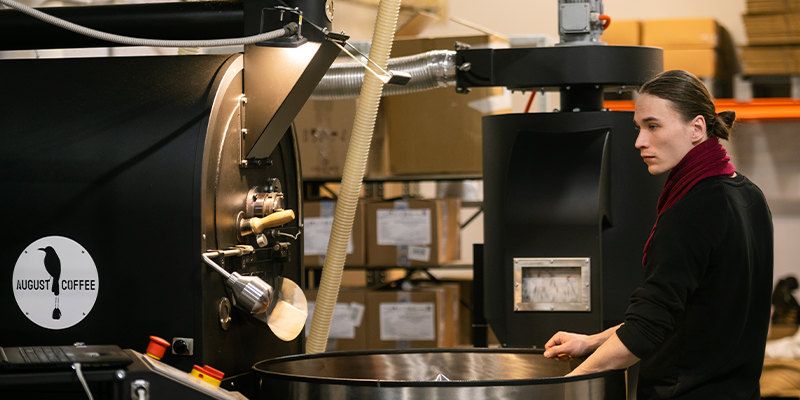
In addition to its focus on local sourcing, Snob’s Coffee employs eco-friendly practices throughout its production process. From utilizing renewable energy sources to minimize reliance on fossil fuels to implementing waste reduction strategies, the company embodies a holistic approach to sustainability. For instance, they have installed solar panels at their roasting facility, significantly decreasing their energy consumption from the grid and demonstrating the viability of renewable energy in agro-processing operations.
#### Renewable Energy and the Future of Agro-Processing
As South Africa confronts an energy crisis exacerbated by load shedding and dependence on coal, companies like Snob’s Coffee serve as models for integrating renewable energy into agro-processing. By investing in solar energy and other renewable resources, Snob’s Coffee not only reduces its operational costs but also highlights the feasibility of transitioning to greener energy solutions.
The impact of this shift extends beyond Snob’s Coffee itself; it serves as a catalyst for the wider agro-processing industry. By proving that sustainability can be both economically viable and environmentally responsible, Snob’s Coffee encourages other businesses to follow suit. This ripple effect is crucial as South Africa works towards its national goals of reducing greenhouse gas emissions and increasing reliance on renewable energy sources.
#### Community Engagement and Economic Development
A critical aspect of Snob’s Coffee’s success is its strong emphasis on community engagement. The company’s model fosters collaboration between farmers, consumers, and local businesses, creating a network of support that enhances sustainable practices. Snob’s Coffee organizes workshops and training sessions for farmers, educating them about sustainable agricultural practices and helping them to improve their yields without damaging the environment.
Moreover, by prioritizing fair trade principles, Snob’s Coffee ensures that farmers receive equitable compensation for their labor. This approach not only empowers local communities but also reinforces the importance of ethical consumption among consumers. In fostering a direct relationship between producers and consumers, Snob’s Coffee establishes a model of transparency and accountability within the supply chain.
#### Challenges and Opportunities Ahead
Despite its successes, Snob’s Coffee faces challenges typical of any innovative business striving to make a difference. The transition to renewable energy requires substantial investment and infrastructure development, which can be daunting for emerging companies. Additionally, establishing a market for sustainably produced coffee necessitates ongoing consumer education and awareness efforts.
However, the opportunities presented by the growing demand for sustainable products are vast. As consumers become increasingly conscious of their purchasing decisions, companies that prioritize sustainability stand to gain a competitive edge. Snob’s Coffee is well-positioned to take advantage of this trend, leveraging its brand identity as a green pioneer to attract environmentally conscious consumers both locally and abroad.
#### Conclusion
Snob’s Coffee stands as a testament to the transformative potential of sustainable practices within the agro-processing sector in South Africa. Through its commitment to local sourcing, renewable energy integration, and community engagement, the company not only sets a benchmark for others to follow but also plays a vital role in the country’s energy transition. As South Africa moves towards a more sustainable future, initiatives like Snob’s Coffee will be essential in driving economic growth while preserving the environment for generations to come. By championing sustainability, Snob’s Coffee not only redefines the coffee industry but also inspires a broader movement towards a greener and more resilient South Africa.