
Beyond the Drum: Deconstructing the World’s Most Advanced Coffee Roaster – An Explainer on Specific Components and Engineering
The pursuit of the perfect roast is an alchemical dance, a delicate ballet between heat, time, and the bean’s inherent potential. While the iconic rotating drum has long been the heart of this process, the truly revolutionary machines of our era go significantly beyond this fundamental element. These advanced roasters are not merely ovens; they are sophisticated engineering marvels, meticulously designed to control every facet of the roasting environment, thereby unlocking nuanced flavors previously thought unattainable.
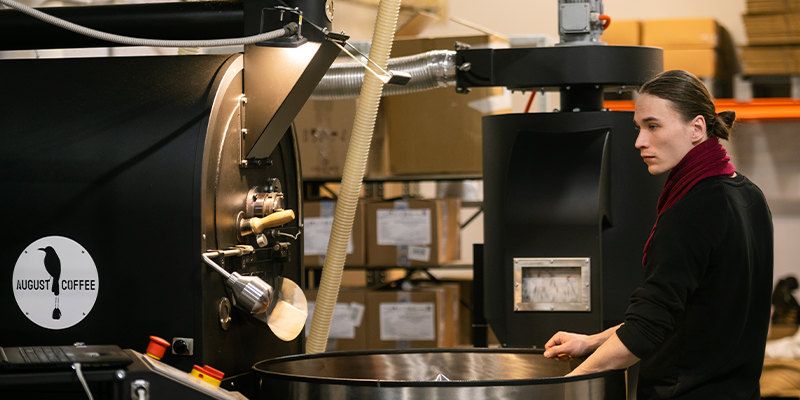
At the core of these breakthroughs is a profound understanding of heat transfer. Traditional drum roasters primarily rely on conductive and convective heat. The advanced models, however, often integrate radiant heat sources, precisely directed to imbue the bean with energy more uniformly and efficiently. This capability allows for faster roasts, preserving essential volatile aromatic compounds that can degrade under prolonged, less controlled heat application. Furthermore, the design of the drum itself has evolved. Materials science plays a crucial role, with some roasters employing specialized alloys that offer superior thermal conductivity and retention, ensuring consistent heat distribution throughout the batch regardless of size.
Beyond the drum’s immediate vicinity, the airflow dynamics are equally critical. Advanced roasters feature intelligent ventilation systems, capable of dynamically adjusting exhaust rates and intake volumes. This allows for precise control over the moisture content and the development of the bean’s internal structure. By carefully managing the airflow, roasters can manipulate the rate at which chaff is removed, preventing unwanted bitter flavors from developing. This also influences the Maillard reaction and caramelization, key chemical processes that define the roaster’s profile.
The control interface and data logging capabilities of these machines represent a significant leap. Modern roasters are equipped with sophisticated sensors that monitor not just bean temperature but also exhaust temperature, ambient conditions, and even the rate of temperature rise (RTR). Integrated software translates this data into intuitive dashboards, allowing roasters to create, save, and replicate precise roast profiles with remarkable accuracy. This data-driven approach transforms roasting from an art reliant on intuition alone into a science that can be refined, scaled, and consistently reproduced, pushing the boundaries of what we understand about coffee.
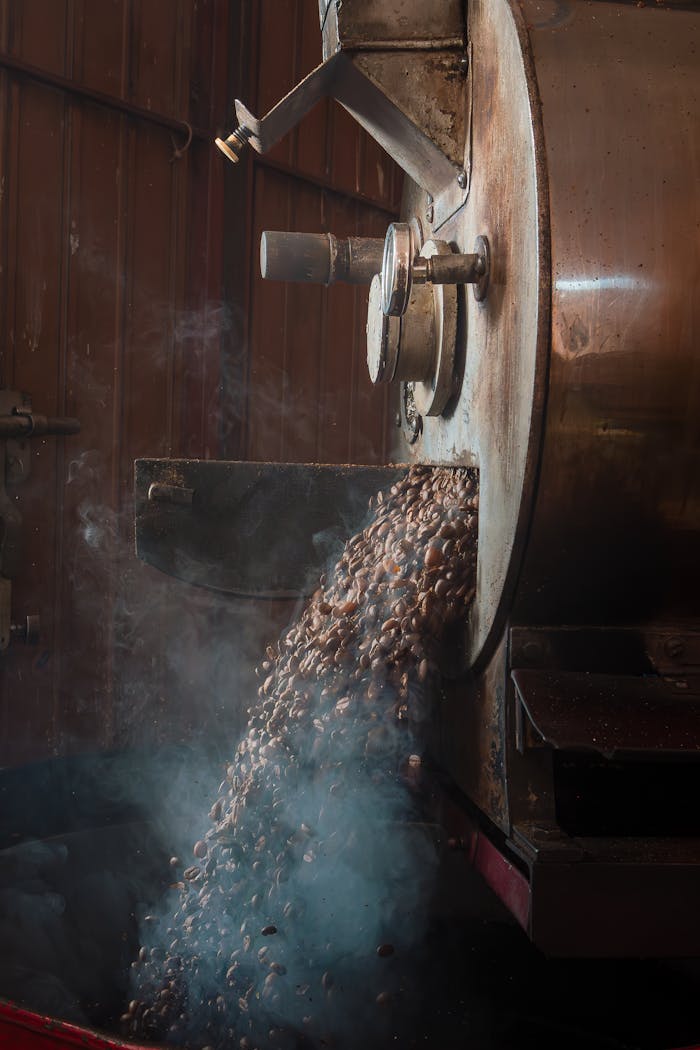
The bean cooling system, often overlooked, is another area where advanced roasters exhibit significant engineering prowess. Instead of relying on simple air circulation, these machines might employ a combination of powerful, directed airflow and even a chilled metal tray. This rapid cooling arrests the roasting process precisely at the desired point, locking in the delicate aromatics and preventing the beans from continuing to cook from residual heat. The efficiency of this cooling phase directly impacts the final cup quality, ensuring that the carefully developed roast profile is maintained.
Further enhancing precision are the drive systems for the roaster’s drum and fans. Forget simple motor and belt setups; advanced roasters utilize variable frequency drives (VFDs) or sophisticated servo motors. These allow for incredibly granular control over drum speed and fan RPM. This means a roaster can precisely manipulate the tumbling action of the beans to ensure even exposure to heat and airflow, or adjust fan speed to create specific pressure differentials within the roasting chamber. This level of control is paramount for achieving consistency across batches, from small, experimental micro-lots to large commercial productions.The integration of automation and predictive algorithms is also revolutionizing coffee roasting. Beyond simple profile replication, some high-end machines are starting to employ machine learning. By analyzing vast datasets of roast parameters and corresponding sensory evaluations, these systems can offer suggestions or even automatically adjust variables in real-time to optimize a roast based on predefined targets. While intuition and human discernment remain vital, this fusion of human expertise and artificial intelligence offers a powerful new dimension to the roasting process, enabling deeper flavor exploration.
Finally, the materials used in construction and the overall design philosophy contribute to the superior performance. Beyond just thermal conductivity, materials are selected for their durability, food-grade safety, and ease of cleaning. The aerodynamic design of the roasting chamber and ductwork minimizes turbulence and ensures efficient heat and airflow distribution. This holistic approach, where every component is considered for its contribution to the overall roasting environment, is what truly elevates these machines beyond the traditional drum roaster, paving the way for an even more nuanced and satisfying coffee future.